|
|
|
|
|
|
|
|
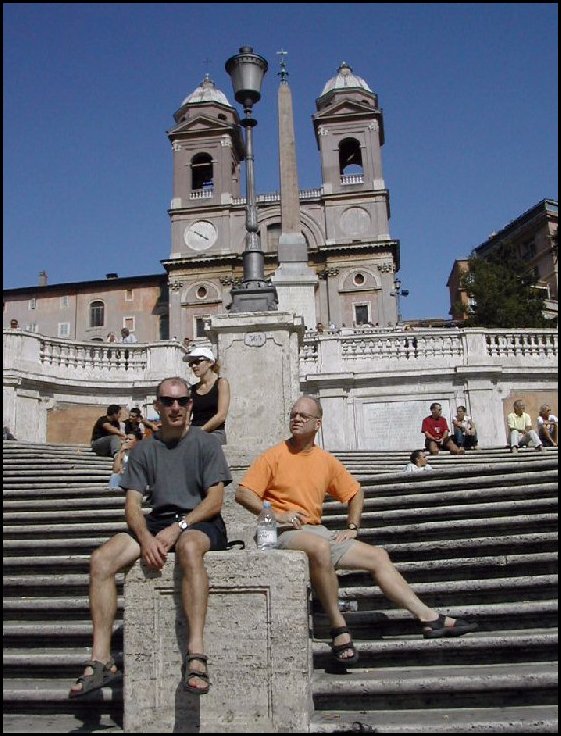
Piazza di Spagna
or
Spanish StepsDesigned by an Italian, paid for by the French,
named for the Spaniards, occupied by the British, and under the sway of
American ambassador Ronald McDonald. Built in 1725.
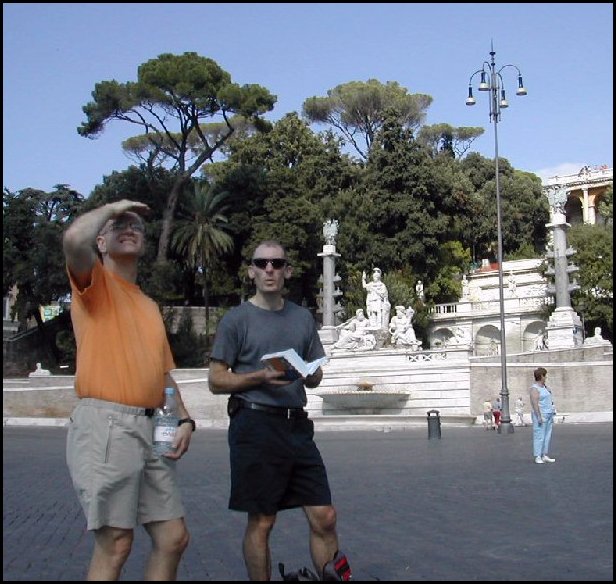
Doug and Roy take a break, after 15 hours
of flying and one hour sleep.
|
|
|
|
|
| |
|
|
|
|
|
|
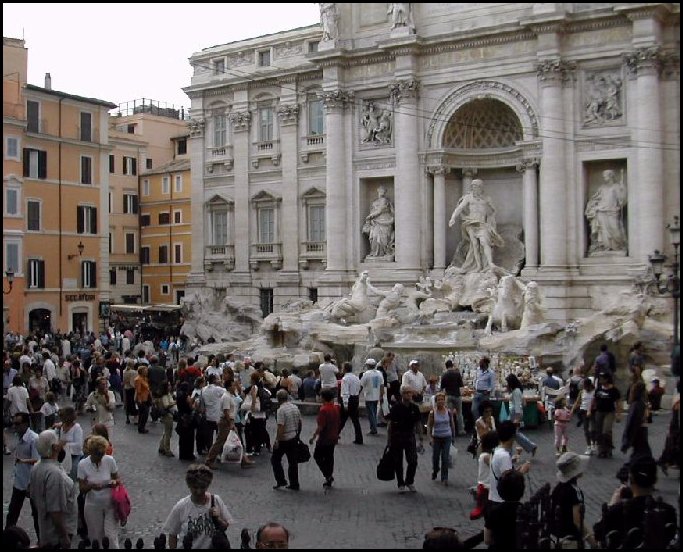 |
Fontana de Trevi.
This was certainly a hot spot for tourists. Even at night there
were tons of people eating gelato and sitting around the fountain. |
|
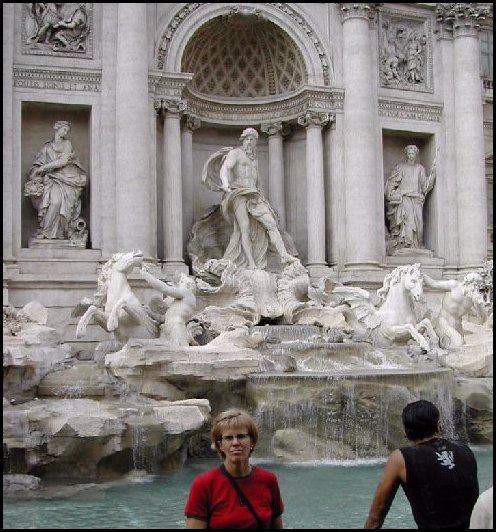 |
Nicolo Salvi's (1697-1751) Fontana di Trevi.
Legend has it that a traveler who throws a coin
into the fountain
is ensured a speedy return to
Rome, and one who tosses two will fall in
love
in Rome. We'd tell you about the three coins option,
but not on this
site.) How many did she throw? |
|
|
|
|
|
|
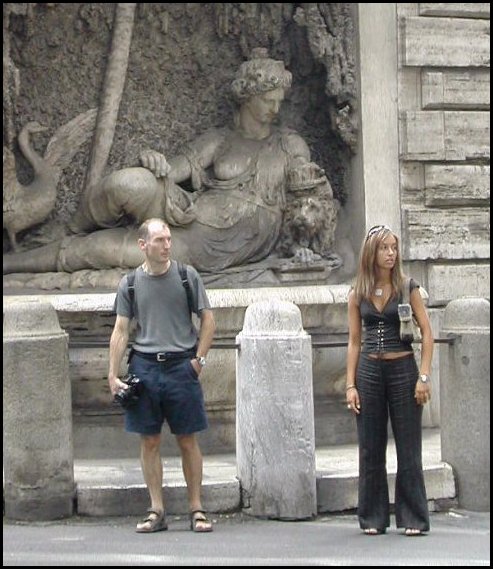 |
Distractions everywhere.
The Rome women
are gorgeous. |
|
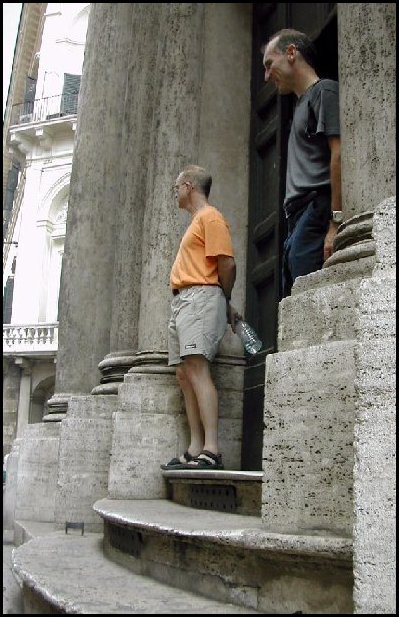 |
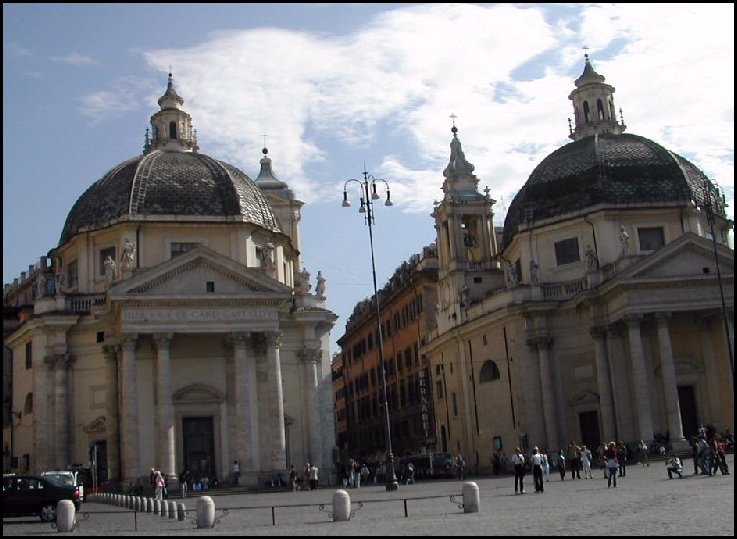
A safe place to wait till the road was
clear to cross. I think the road in
front
of this church was a drag strip for all the
motor scooters in
Rome. It was like being
at the race track, engines roaring
and scooters
flying everywhere. |
|
|
|
|
|
|
|
|
Jet lagged and incredibly tired it was time to
head back to our hotel for a
rest before foraging for
dinner. |
|
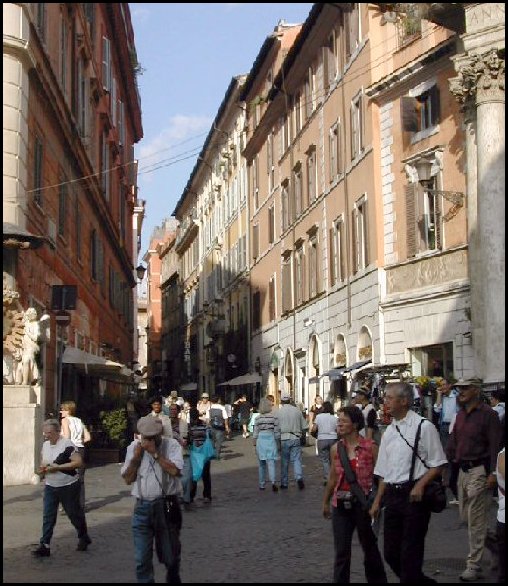 |
One of the many narrow streets on
the way back to the hotel. |
|
 |
|
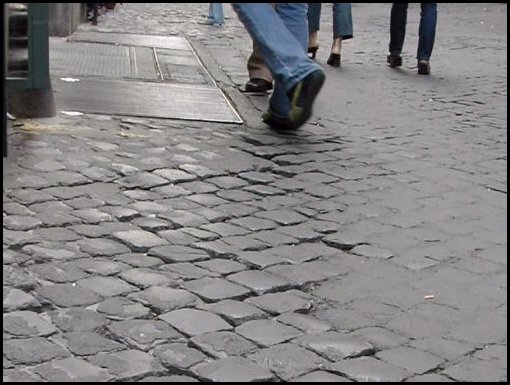
All the streets are cobbled from different eras. |
|
 |
|
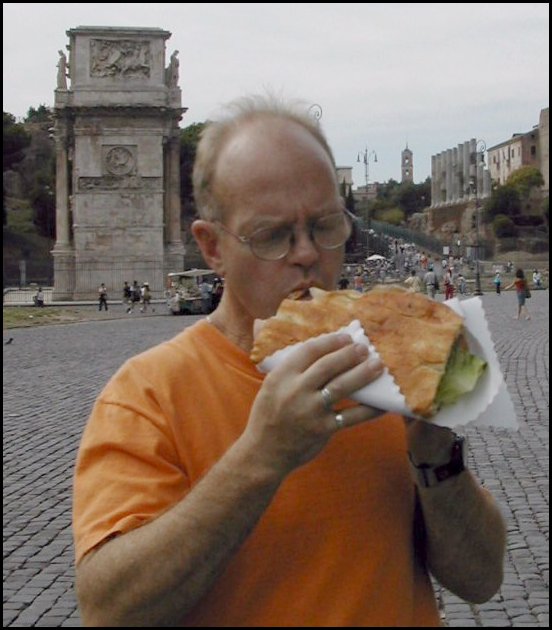
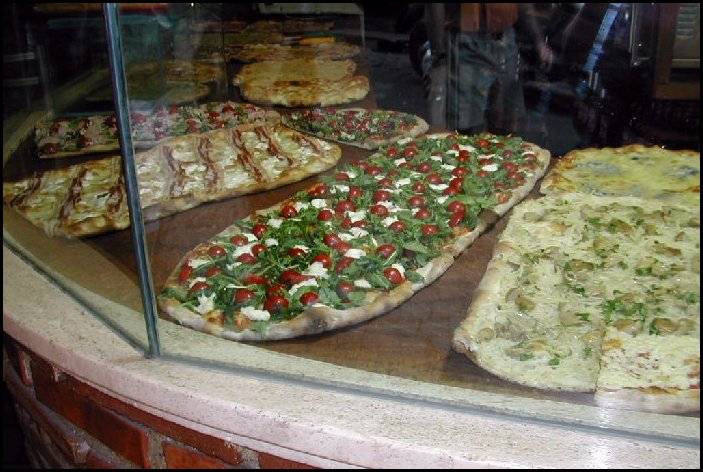
Now that's a pizza! |
|
|
|
|
|
| |
|
Day 2: Having slept in to recover from jetlag,
we decided to head towards the Colosseum and other local sites. The
Vatican would just have to wait. |
|
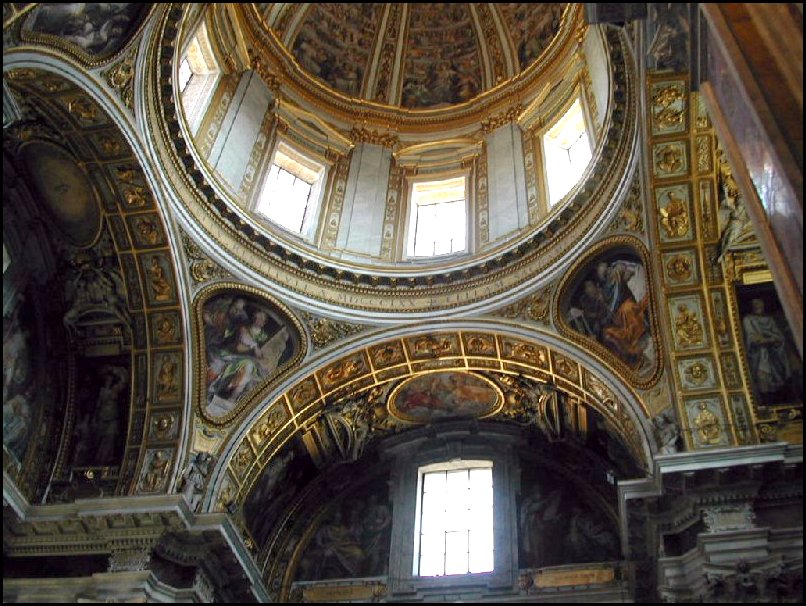 |
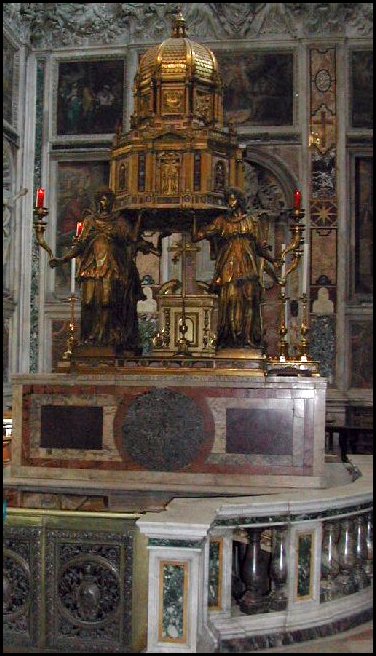
Basilica di Santa Maria Maggiore
Officially part of the Vatican City. Originally built in 352, Pope Sixtus III
commissioned the basilica when he noticed that Roman women were
still
visiting a temple to the pagan mother - goddess Juno Lucina. Sixtus
then tore it down and built a new basilica and substituted a Christian
cult for a pagan one. |
|
 |
 |
|
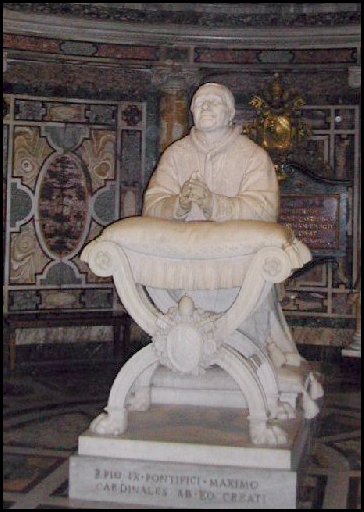
Statues in the Basilica |
|
|
|
|
|
|
|
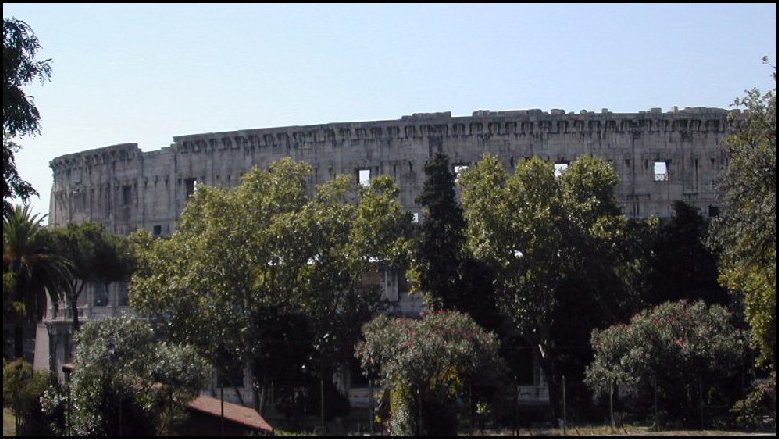
The Colosseum -
Opened in AD 80 |
 |
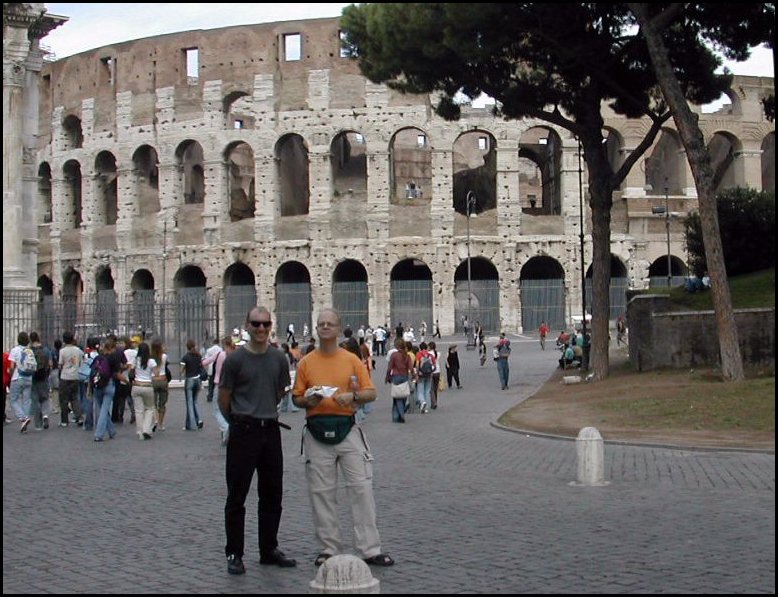 |
The Colosseum stands as the enduring symbol of the Eternal City.
It dwarfs
every other ruin in Rome. |
|
|
|
|
|
|
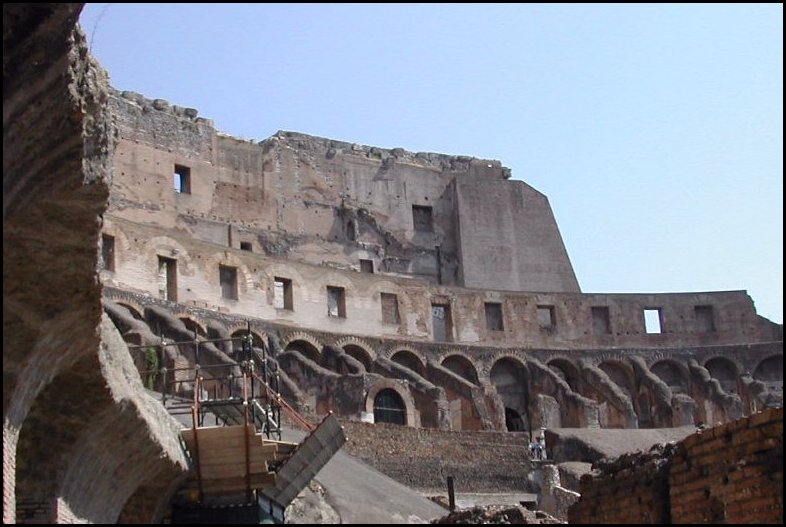 |
Above the arches
there would have been wooden stands that went
right to the top of the wall
and this was for the women, children,
and pheasants. The colosseum could
hold 50,000 crazed spectators
from Aristocrats, to Noblemen, to lower
class. |
|
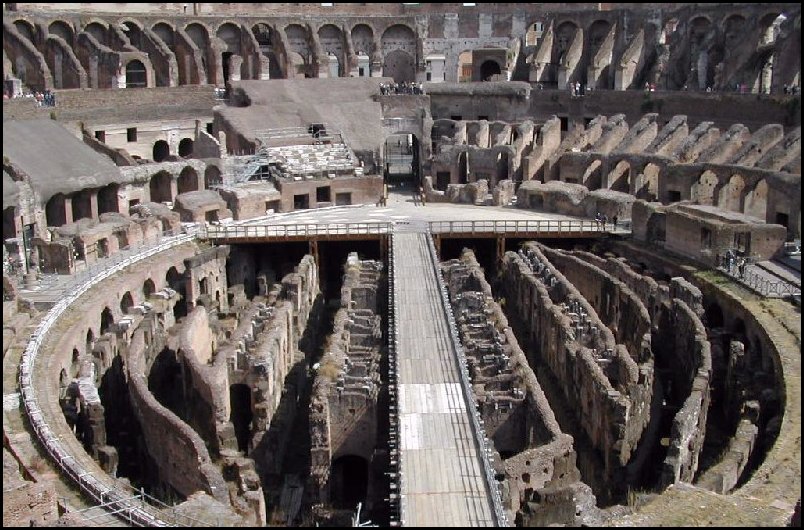 |
Within 100 days of
it's opening, some 5000 wild beasts perished
in the bloody arena and the
slaughter went on for three more centuries.
Where the floor once covered
there is a labyrinth of brick cells,
ramps, and elevators used to
transport wild animals from cages up
to arena level. |
|
|
|
|
|
|
|
 |
|
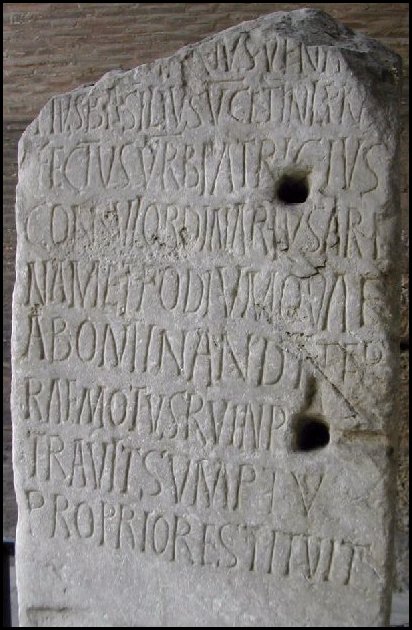
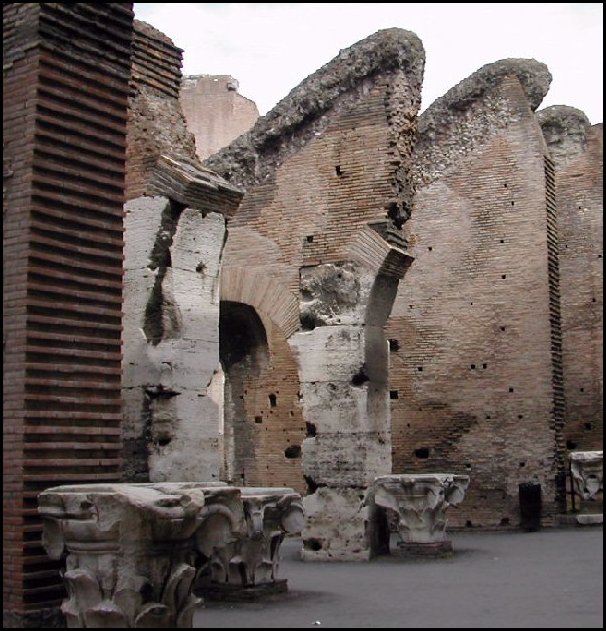
Gothic Stone. |
|
 |
|
Old arches in outer walkway. |
|
|
|
|
|
|
|
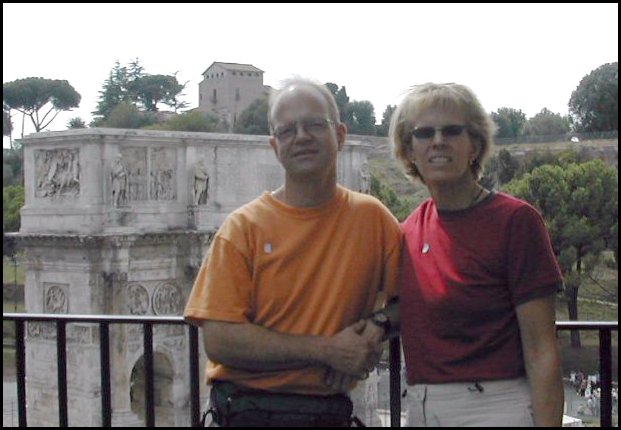
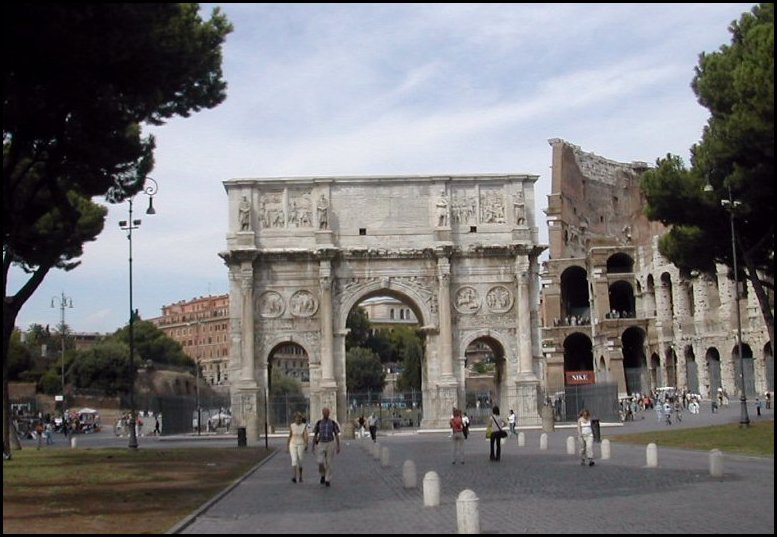
Arco di Constantino
Between the Colosseum and Palantine Hill |
 |
 |
|
Constantine built
the arch to commemorate his victory over Maxentius at the Battle of the
Milvian Bridge in AD 312, using fragments from monuments built by emperors
Trajan, Hadrain, and Marcus Aurelius, creating the triple arch. |
|
|
|
|
|
|
|
|
|
 |
|
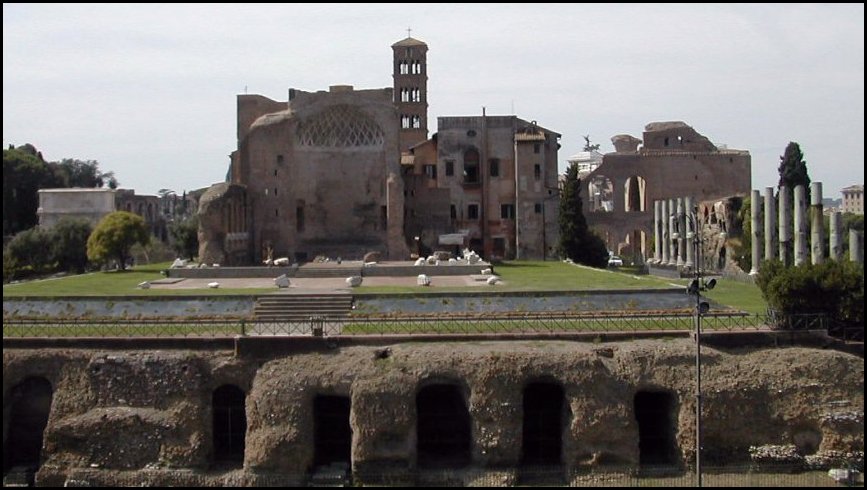
Palatine Hill |
|
|
|
|
|
|
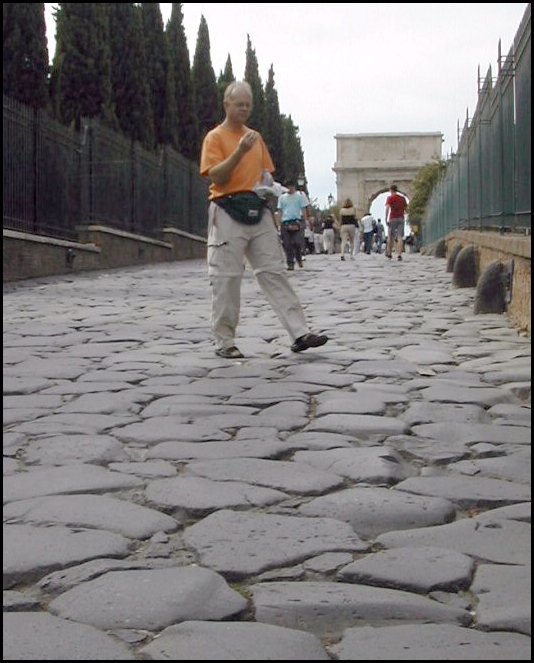 |
The entrance ramp
to the Forum, which Roy
is on, is the oldest street in Rome.
It leads the
way into both the Palatine Hill
and the Roman Forum. |
|
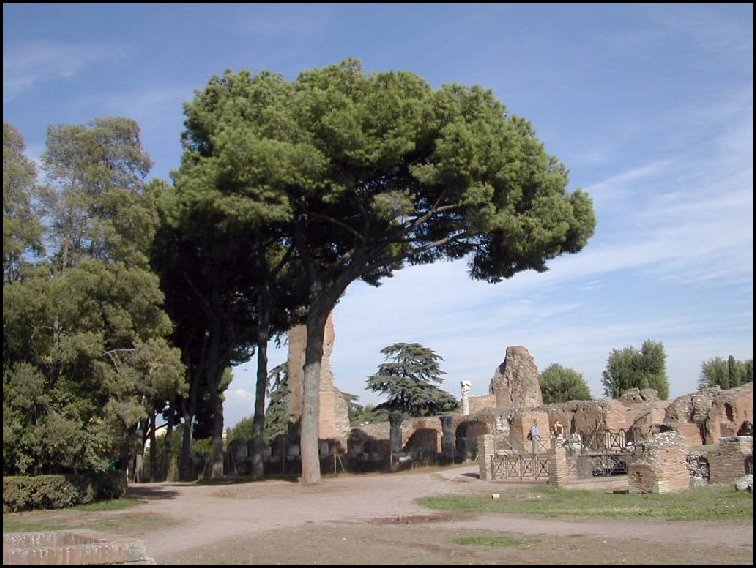 |
|
What remains of the
buildings on Palatine Hill. |
|
|
|
|
|
|
|
The Palatine Hill lies between the Tiber River and the
Forum. The Forum was originally a low laying swamp land and was often
flooded by the Tiber so during Rome's Iron age the inhabitants lived on
the hill. The hill was also home to the she-wolf that suckled
Romulus and Remus. It was here that Romulus built the first walls of the city.
During the Republic, the Palatine was the city's most fashionable
residential quarter, where aristocrats and statesmen, including Cicero and
Marc Antony, built their homes. Later emperors capitalized on the hill's
prestige, building themselves gargantuan quarters. By the end of the first
century, the imperial residence swallowed up the entire hill. |
|
|
 |
|
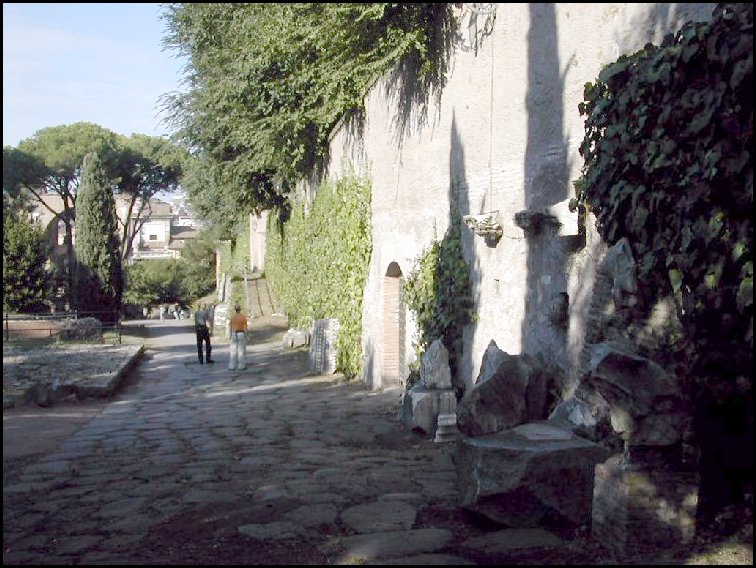
Leaving the
Palatine Hill |
|
|
|
| |
|
|
|
|
|
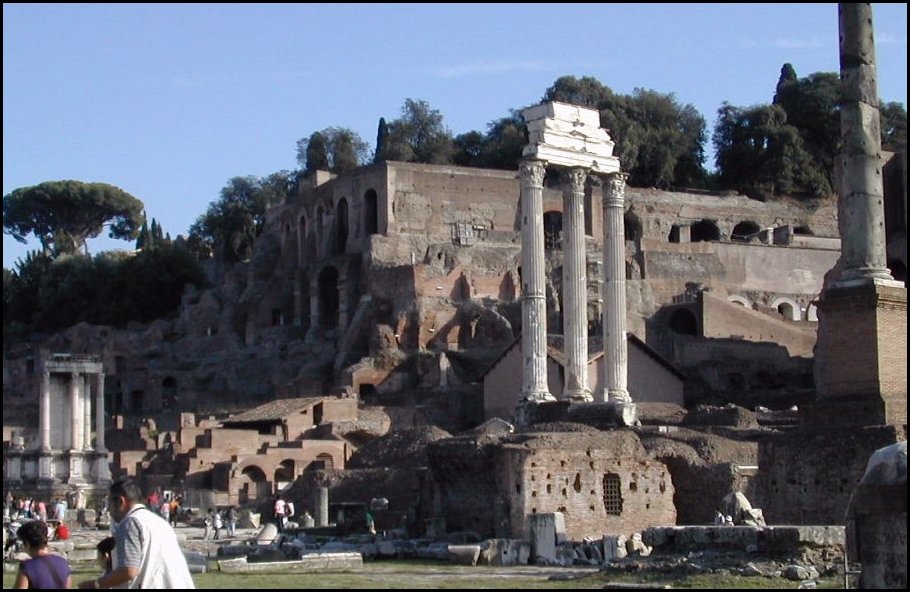
The Forum |
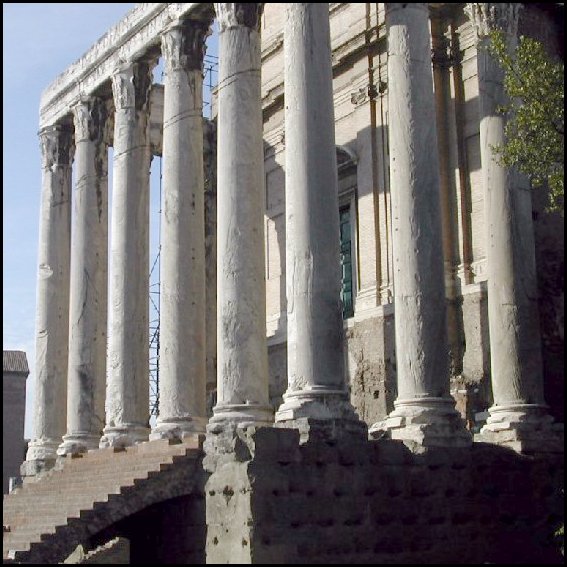 |
 |
|
Lower Forum |
Upper Forum - House of the Vestal Virgins |
|
|
|
|
|
|
The Forum - In the 7th and 8th centuries BC,
Etruscans and Greeks used the Forum as a weekly market. The people who
would soon be known as the Romans founded a thatched-hut shanty-town on
the site of the Forum 753 BC. Now the Forum bears witness to centuries of
civic building.
The Vestal Virgins tended the city's eternal, sacred fire, keeping it
continuously lit for over a thousand years. The Vestal Virgins were among
the most respected people in Ancient Rome. For 30 years, the six virgins
who officiated over Vesta's rites, each ordained at the age of seven,
lived in spacious seclusion above the Forum. They were the only women
allowed to walk unaccompanied in the Forum and possessed the right to
pardon prisoners. This esteem had its price; a virgin who strayed from
celibacy was buried alive with a loaf of bread and a candle- to allow her
to survive long enough to contemplate her sins. |
 |
 |
|
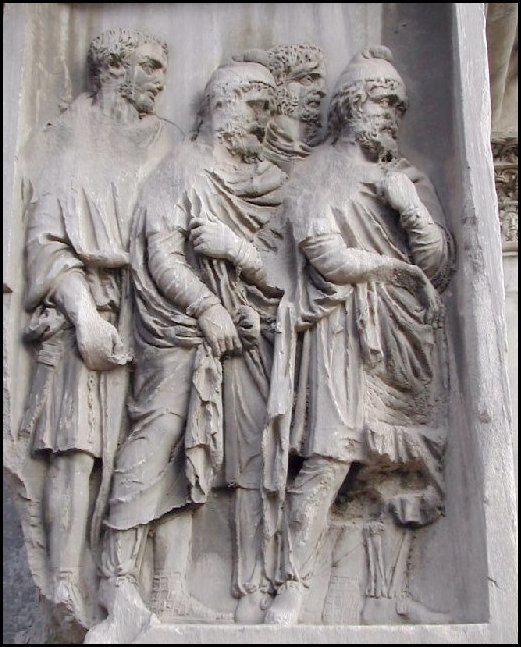
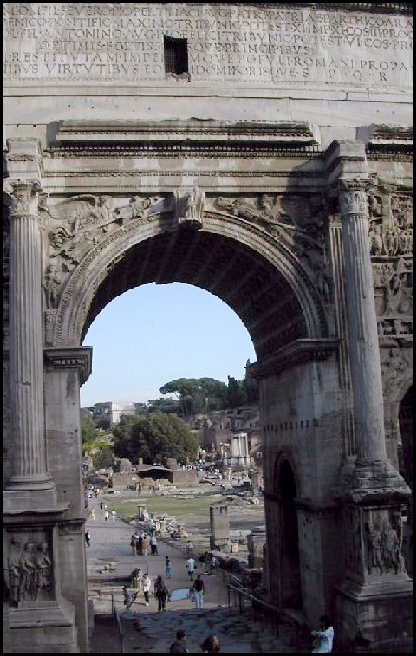
Arch of Titus,
built in AD 81 by Domitian to celebrate his brother Titus, who destroyed
Jerusalem 11 yrs earlier. |
|
|
|
|
|
|
|
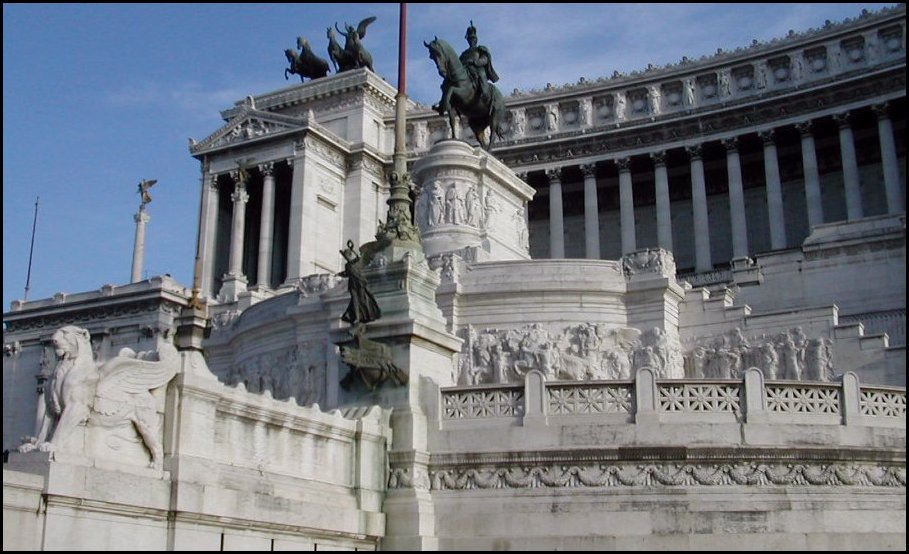 |
Museo Nazionale del Palazzo Venezia
OR Mon A Vittorio Emanuele II on the Piazza Venizia?
(We're not sure which this is)
Some elaborate building with guards outside.Piazza Venezia and Via Del Corso
Via del Corso was Rome's premier racecourse.
It runs nearly a mile between
P. del Popolo and the P. Venezia |
|
|
|
|
|
|
|
 |
 |
 |
|
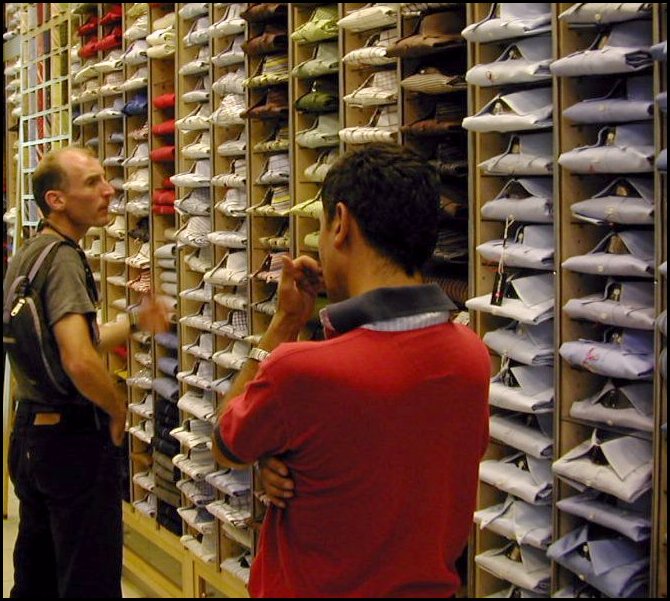
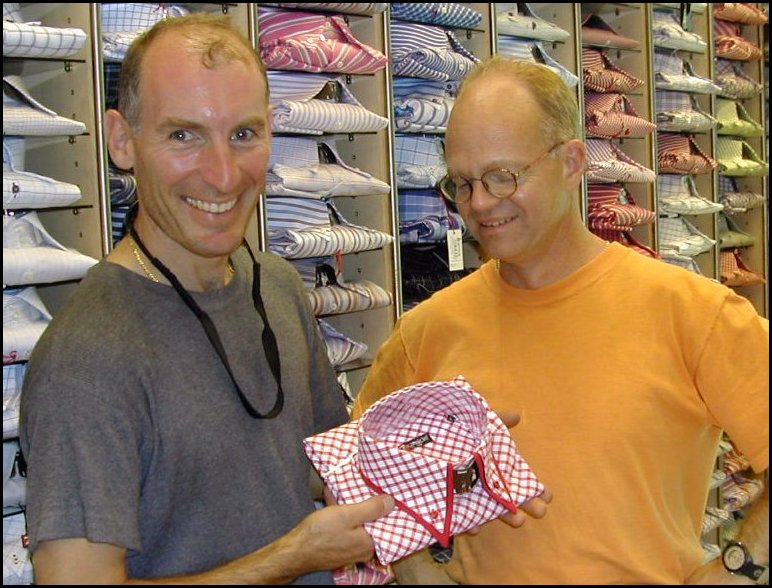
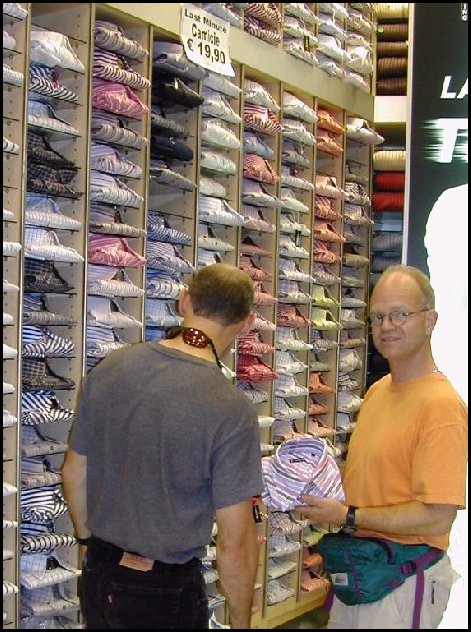
On the way home the boys did a little shirt shopping. Don Cherry would be
in his glory, check out those collars. |
|
|
|
|
|
|
| |
|
Day 3: Todays the big
day.
The Vatican
and St. Peters Basilica. It took us a while to figure out where to
get onto the Metro but eventually we pushed and shoved with the rest of
the locals and were on our way across town. |
|
 |
 |
|
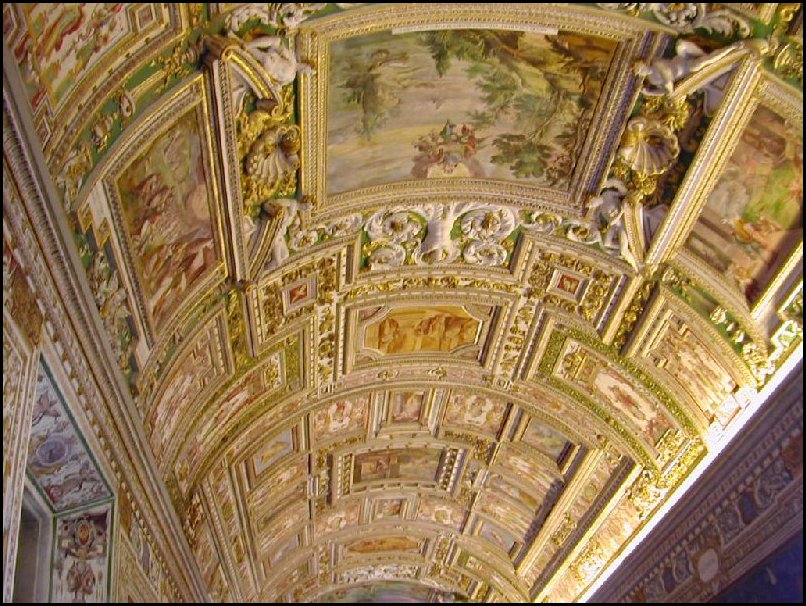
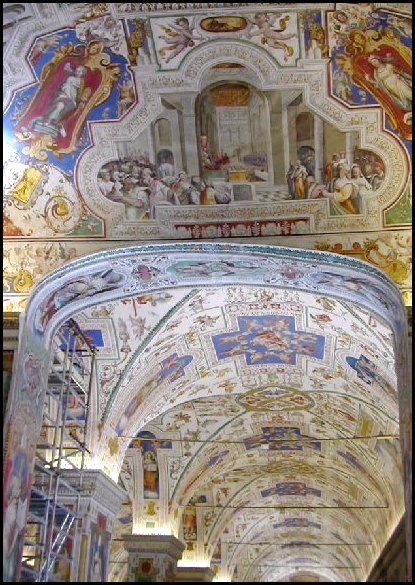
There were limited places where we could take pictures so you'll just have
to go yourself to see the rest. We passed through the Galleria degli
Arazzi (tapestries), the Galleria delle Mappe (maps), the
Apartamento di PioV, the Stanza Sobieski, and the Stanza della Immaculate
Concezione on the way to the Sistine Chapel.
From the Room of the Immaculate Conception, a door leads into the first
of the four Stanze di Rafaele, apartments built for Pope Julius II
in the 1510's. Raphael painted a trial piece for Julius, who was so
impressed that he fired his other painters, had their frescoes destroyed,
and commissioned Raphael to decorate the entire suite. (I personally
enjoyed Raphael's paintings)
|
|
|
|
|
|
|
|
Vatican City -Occupies 108.5 independent acres
entirely within the boundaries of Rome and is the foothold of the Catholic
Church. The nation preserves its independence by minting coins with the
Pope's face, running a separate postal system, maintaining an army of
Swiss Guards, and hording fine art in the Vatican Museums.
|
|
Basilica Di San Pietro (St. Peter's) |
 |
 |
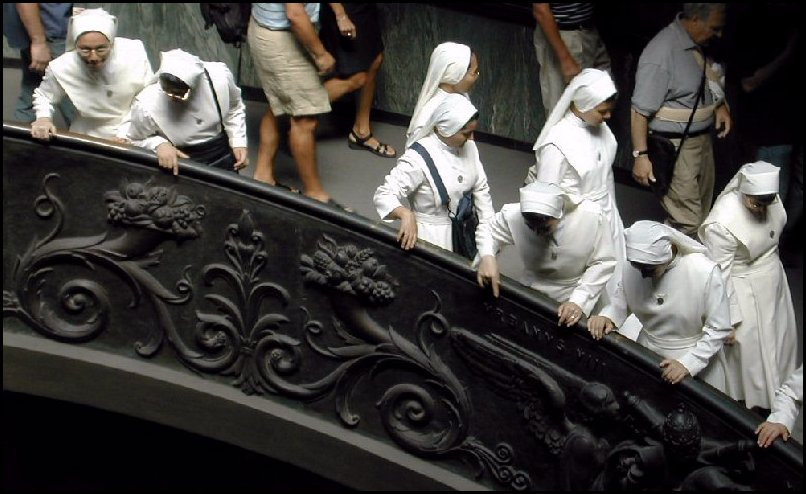
We went to have tea with the Pope, but
wouldn't
you know it. He stood us up.
We had to settle for a bunch of nuns. |
 |
|
|
|
|
|
|
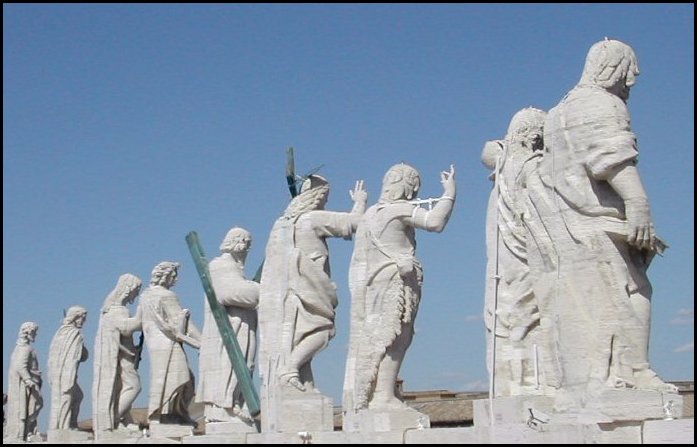
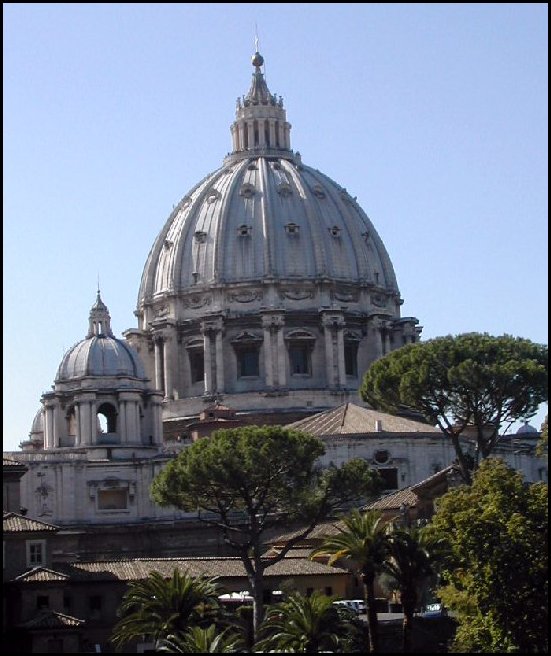
The statues on the top of the Basilica represent
Christ (center),
John the Baptist and
the Apostles (except for Peter).
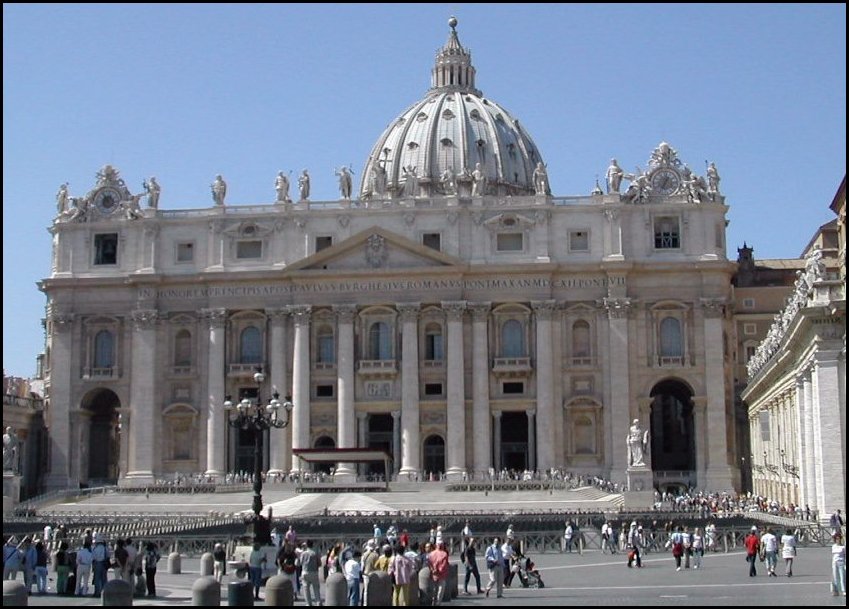
The Basilica rests on the reputed site of
St. Peter's
tomb. |
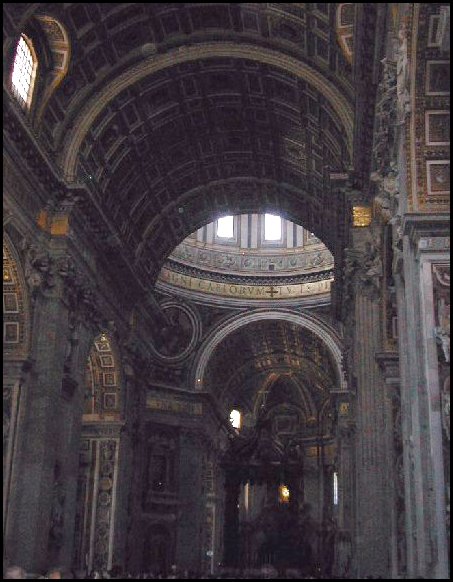 |
The interior of St. Peter's measures 186 cm by 137 cm along the
transepts.
Lighting was poor so any pictures hardly do the grandeur
justice.
The marble floors were as impressive as the paintings. |
|
|
|
|
|
| |
 |
 |
 |
 |
|
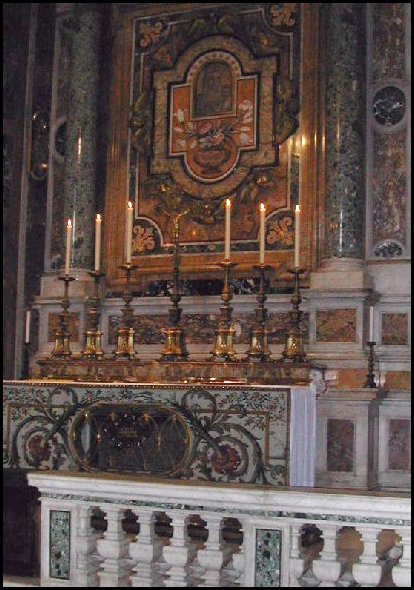
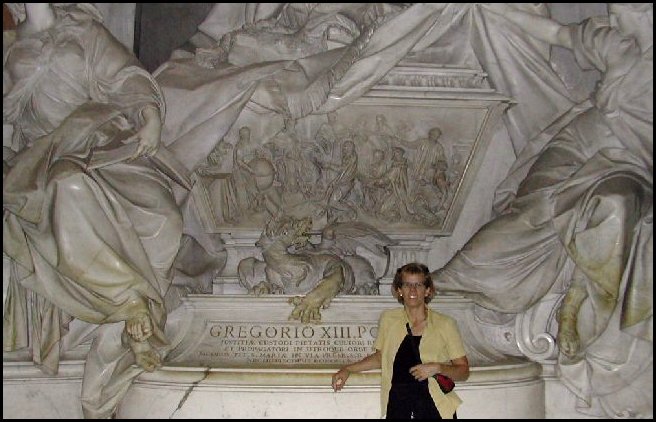
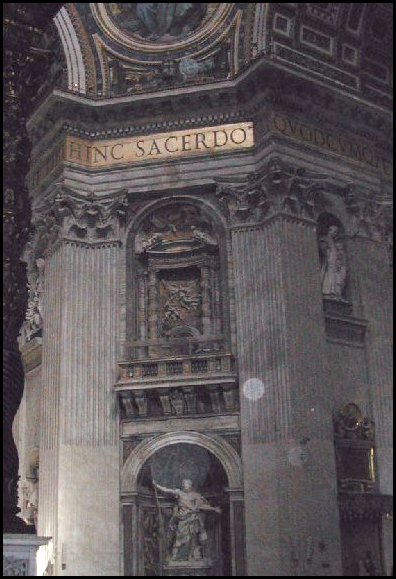
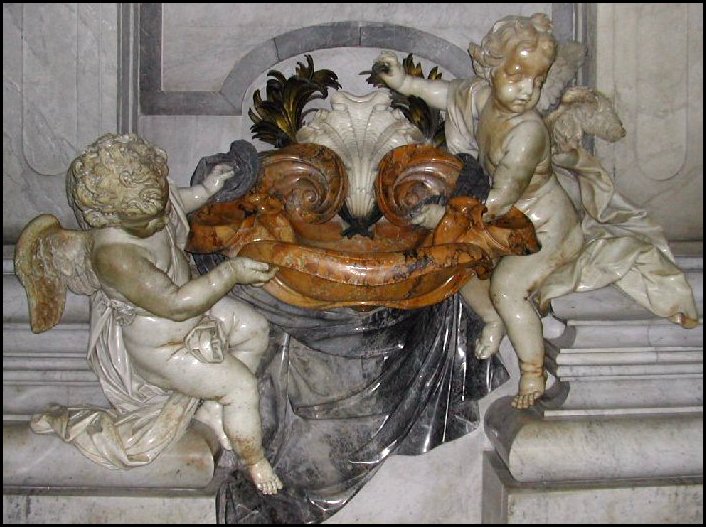
The marble statues,
columns and floors were very impressive.
|
|
|
|
|
|
|
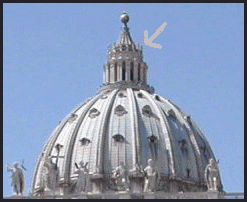
Cupola of St.
Peter's |
 |
 |
|
|
|
|
|
|
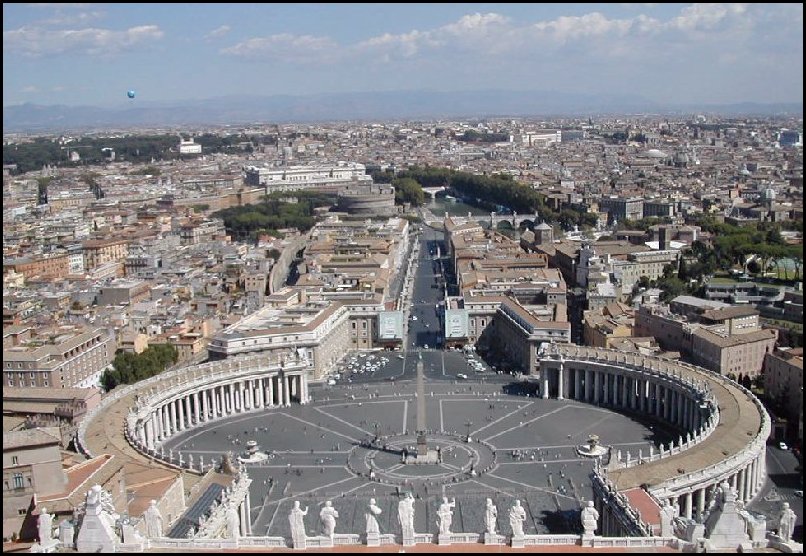
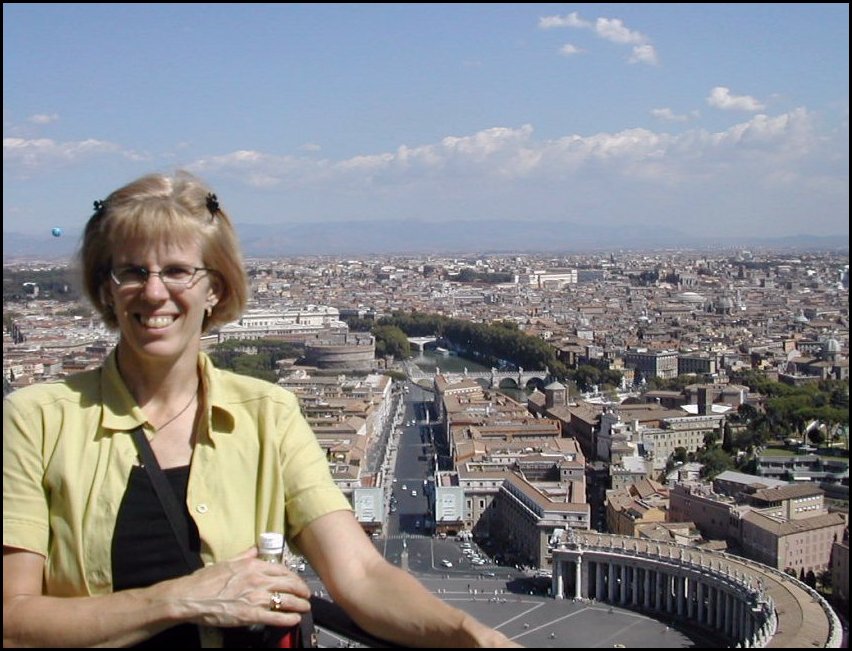
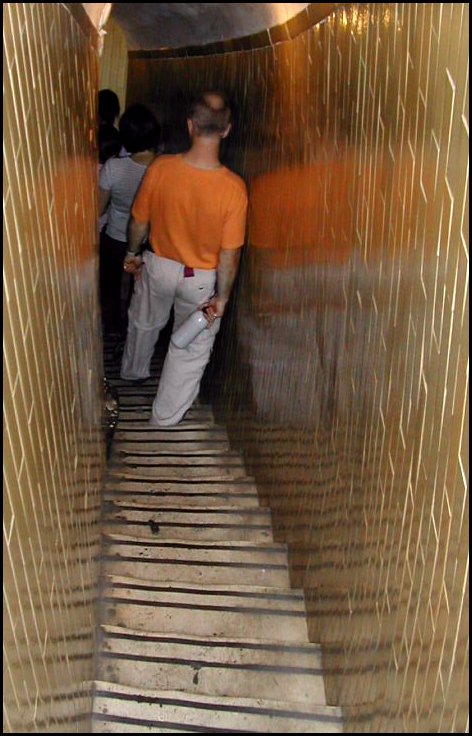
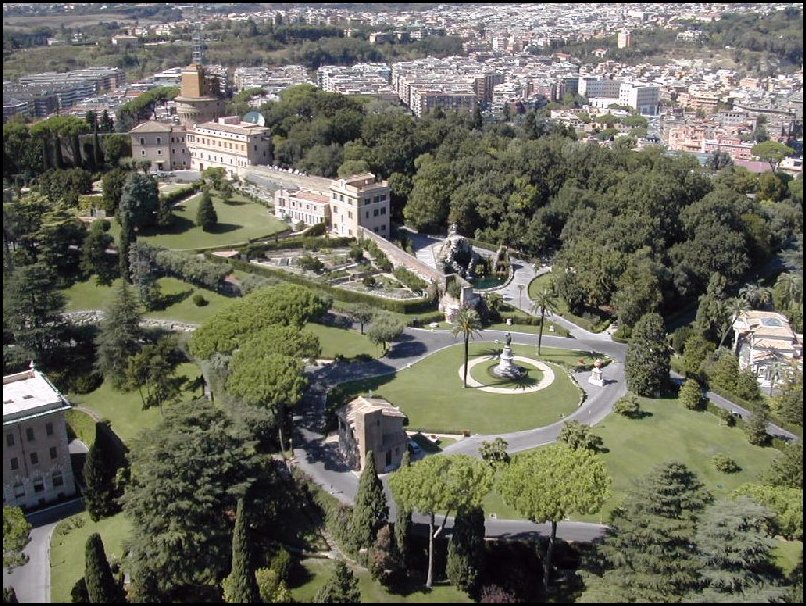
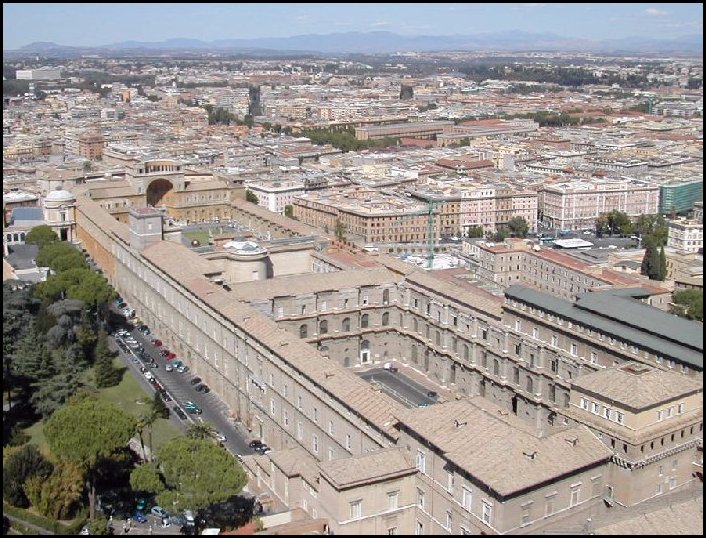
After climbing 350 stairs to the top of the Cupola
(see arrow) we had
an excellent view of the piazza,
The Vatican gardens, Rome's skyline and
the Vatican itself (square building lower right). |
 |
 |
|
|
|
|
|
|
| |
|
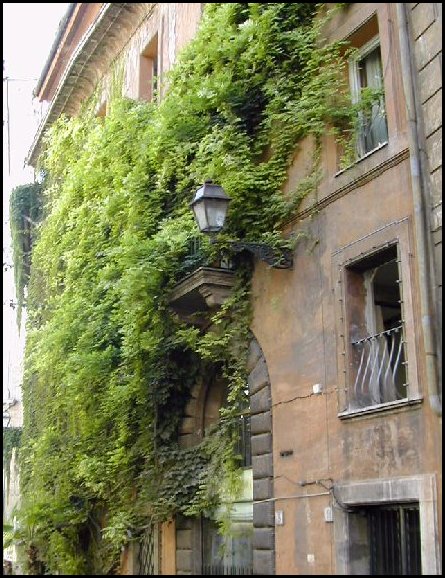
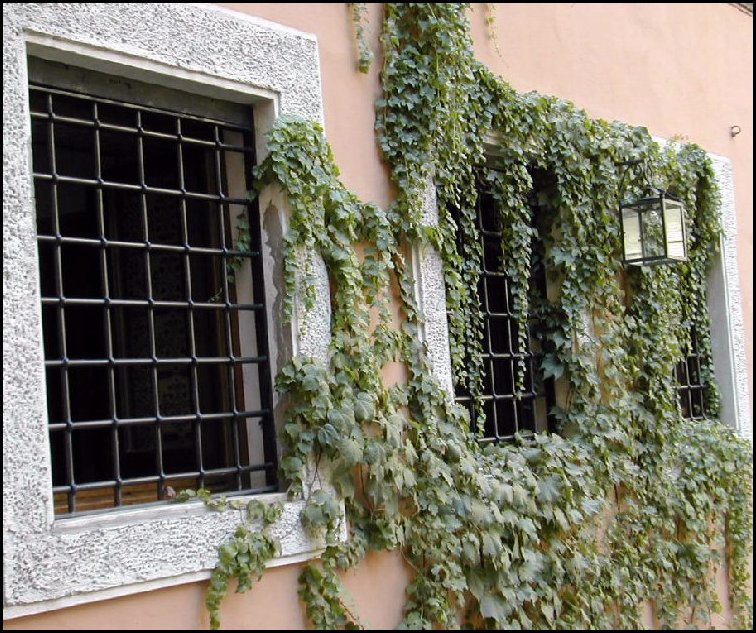
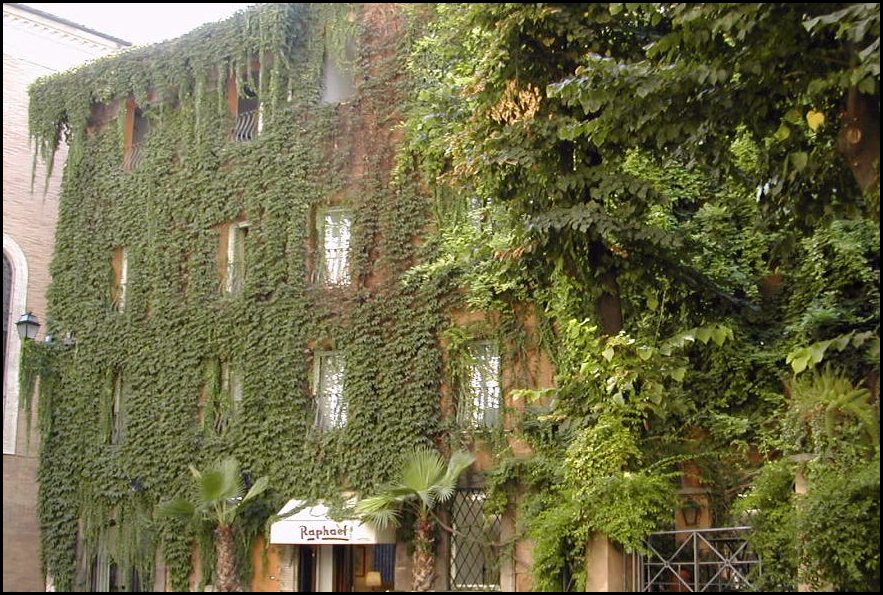
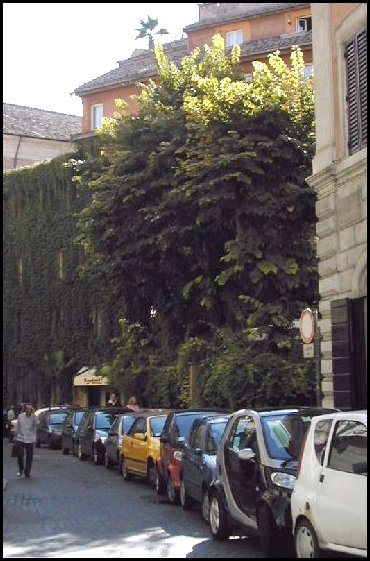
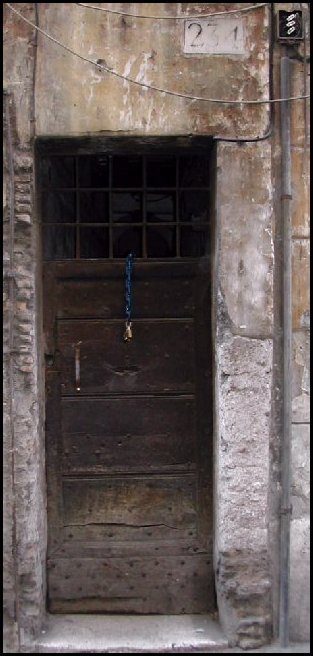
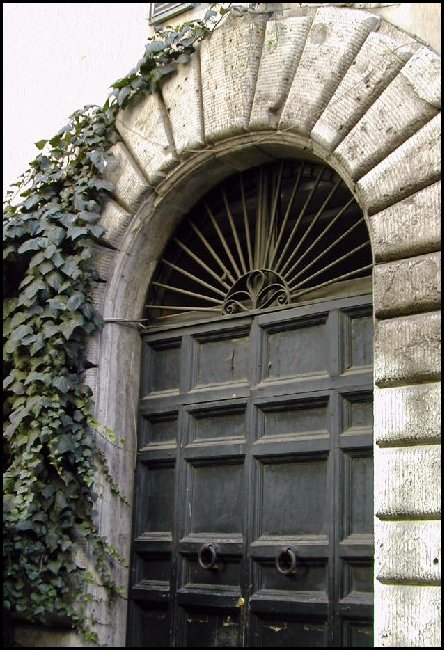
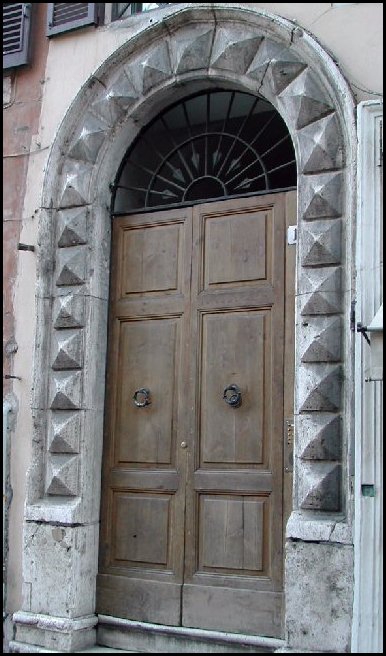
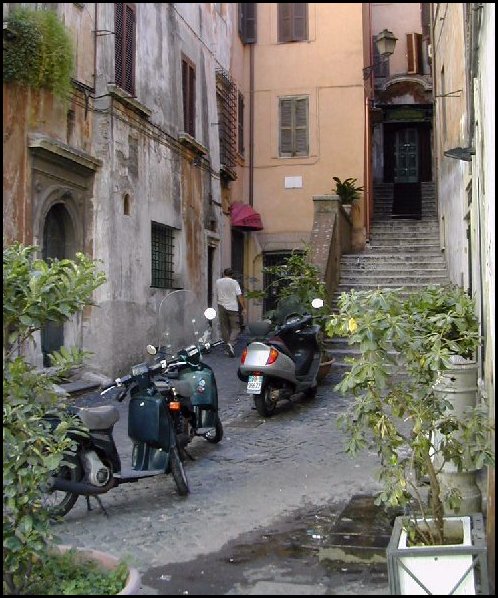
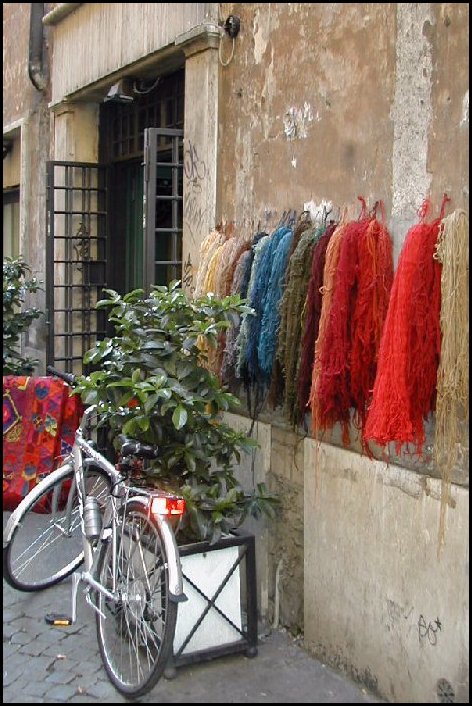
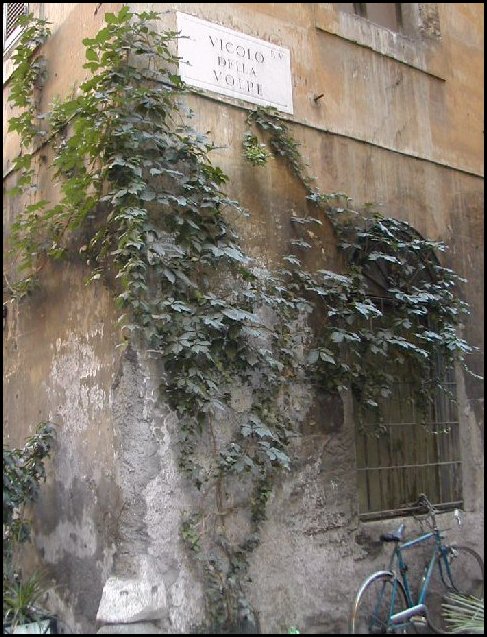
After St. Peter's we wandered our way towards
home through the many narrow streets and found some interesting buildings,
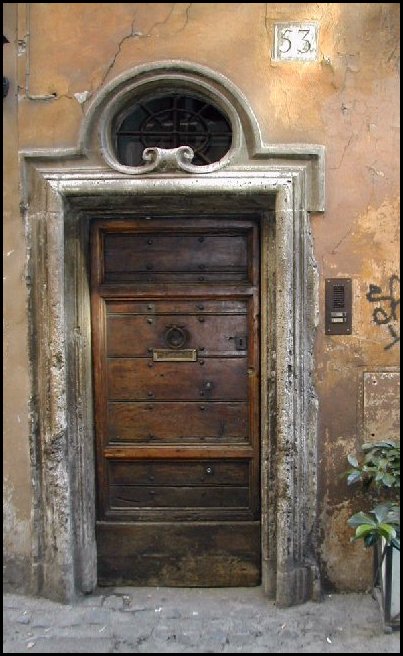
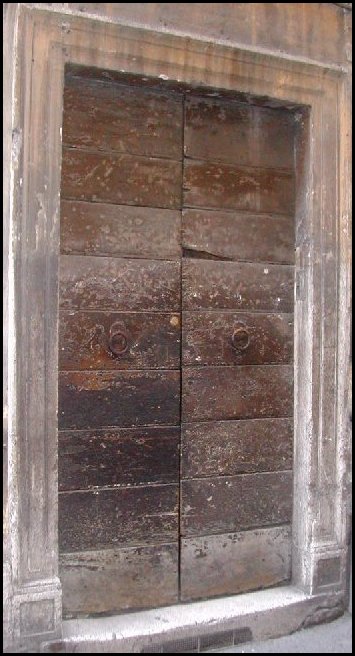
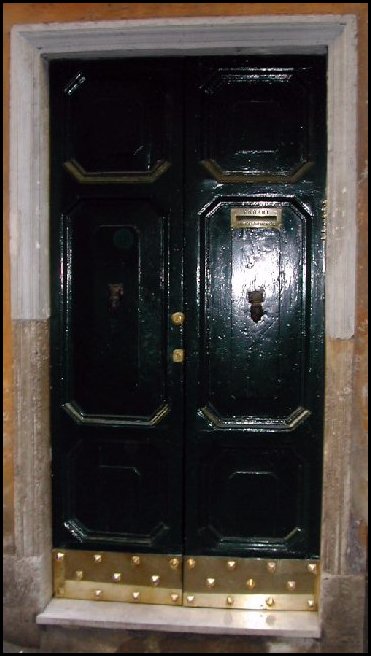
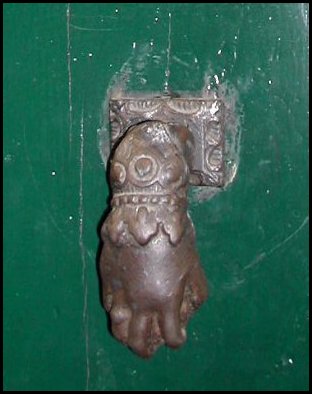
courtyards, and doors (some elaborate, others well worn). |
 |
 |
 |
 |
 |
|
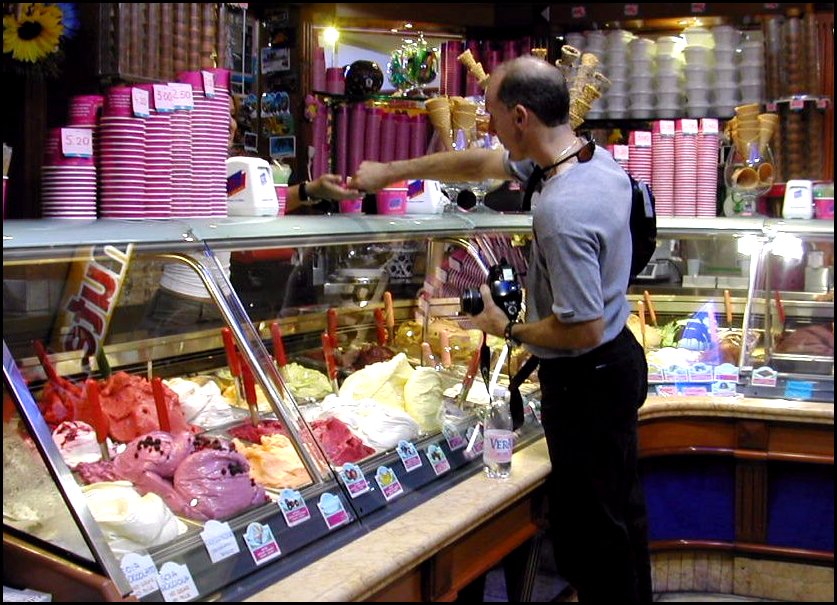
How could anyone
resist the Gelato with a display like this. |
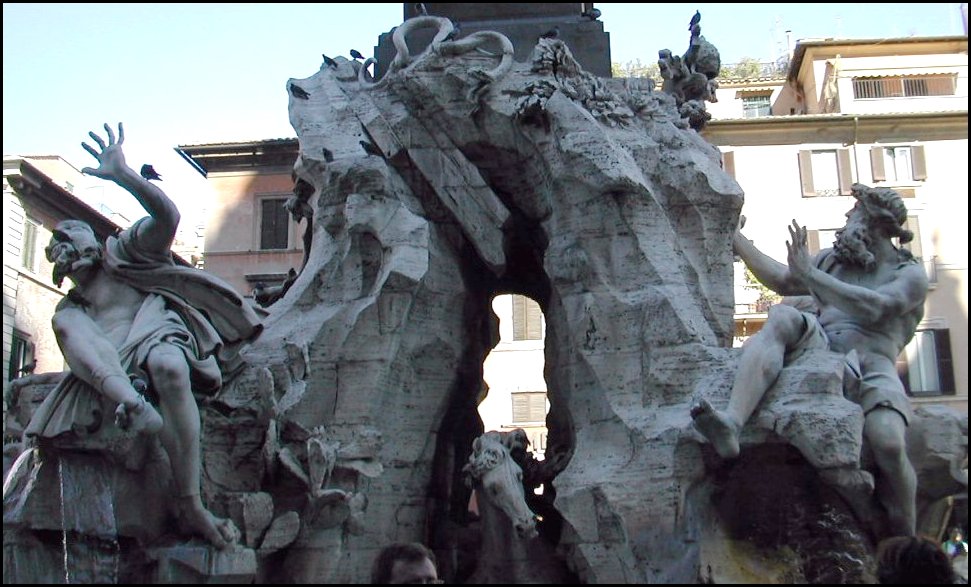
Piazza Navona &
Fontana dei Quattro Fiumi
Fountain of the Four Rivers |
|
|
|
The Piazza Novona was used to house wrestling
matches, chariot races, and mock naval battles, with the stadium flooded
and fleets skippered by convicts. (The mock naval battles, using convicts,
went to death)
Fountain of the Four Rivers Each of the four river gods represents
one of the four continents of the globe; the Ganges for Asia, the Danube
for Europe, the Nile for Africa and the Rio de la Plata for the Americas. |
|
|
|
|
|
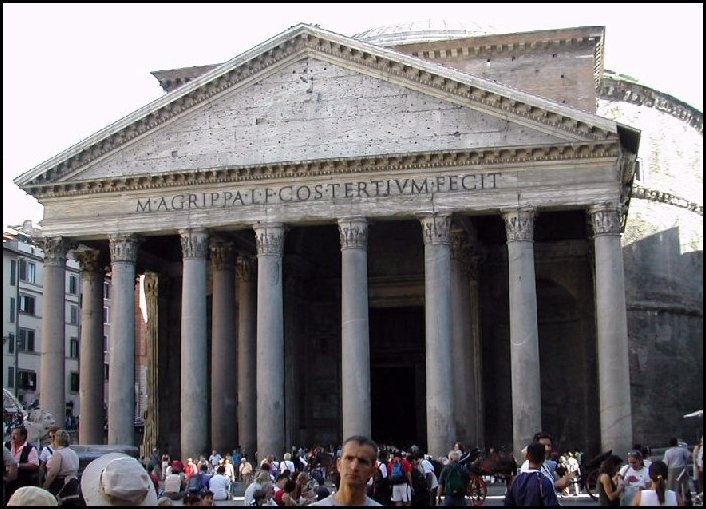
Pantheon With granite
columns, bronze doors, and a soaring domed interior, the Pantheion has
remained remarkably similar since it was built nearly 2000 years ago. The
domed ceiling is open to the elements and there are drain holes in the
marble floor to allow the rain water to drain off. It's official name is
Church of Santa Maria ad Martyres. |
 |
|
Pantheon |
|
 |
|
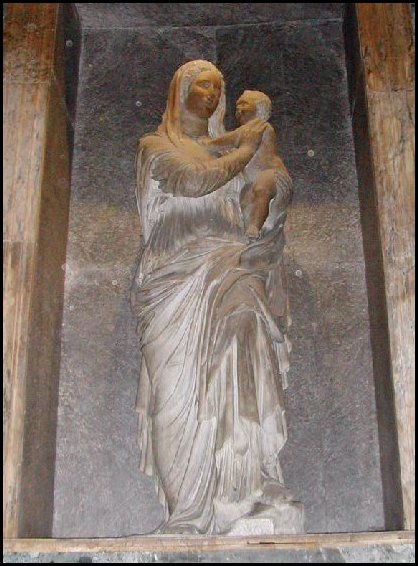
I believe it is under this painting in the
Pantheon that Raphael's (the
painter)
body is
buried. |
|
|
|
|
|
|
|
|
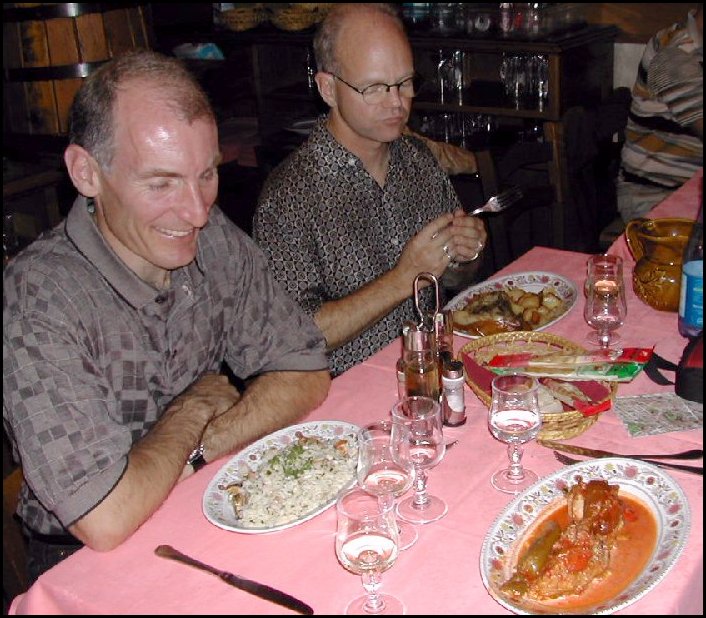
Although we were
all very tired from a long day of walking the streets we headed out
towards Trevi Fountain and found a wonderful place for dinner and a glass
or two of local vino. Great way to end the day. |
 |
|
 |
 |
|
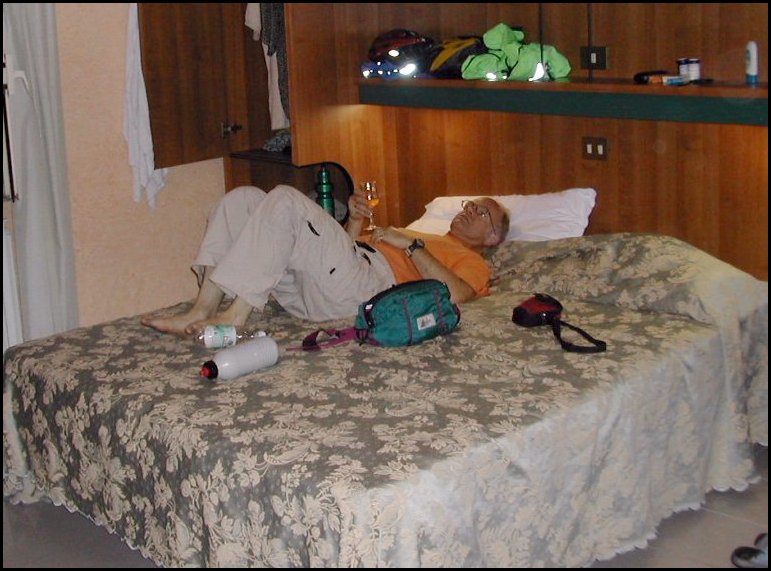
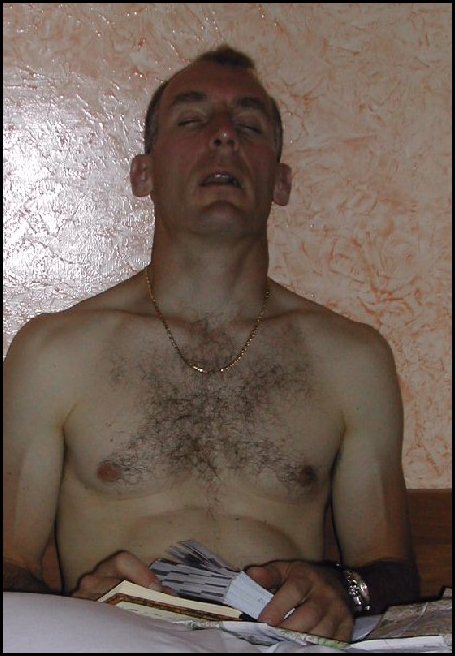
I'd say the boy's are done! |
|
|
|
|
|
|
|
Well that's all for
Rome, now we're off to meet the group for our
cycle tour in Tuscany. |
|
|
|
|
|
|